
BACS-compliant without replacing everything
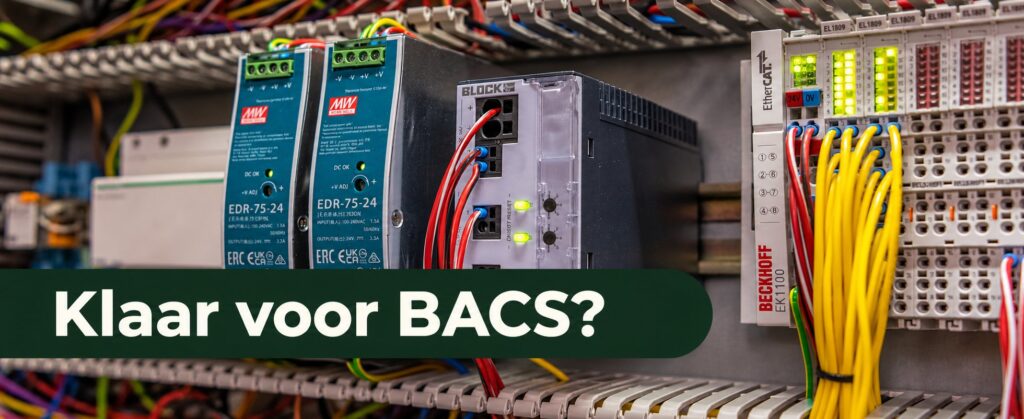
In many buildings, the building management system has been running for nearly ten years. At a certain point, the system is no longer supported and spare parts become difficult to obtain. It then seems like there is only one way out: replacing the entire control system, with the associated costs and works.
Since the end of 2025, the BACS obligation has been added to this. For many building managers, this coincides with an installation reaching the end of its lifespan. This is a good time to approach the question differently: what truly needs to be replaced, and what can stay?
What the law requires
Every non-residential building with a heating or cooling system of more than 290 kW must have a BACS. Heating and cooling are considered separately. By the end of 2029 at the latest, the threshold will drop to 70 kW.
The system must measure energy consumption and store it for five years, communicate with all your installations—including those from different brands—and provide alarms in case of deviations. It must detect efficiency losses, prevent heating and cooling from working against each other, and optimize the use of own solar energy or waste heat. Additionally, it monitors temperature, humidity, and CO₂ per 100 m².
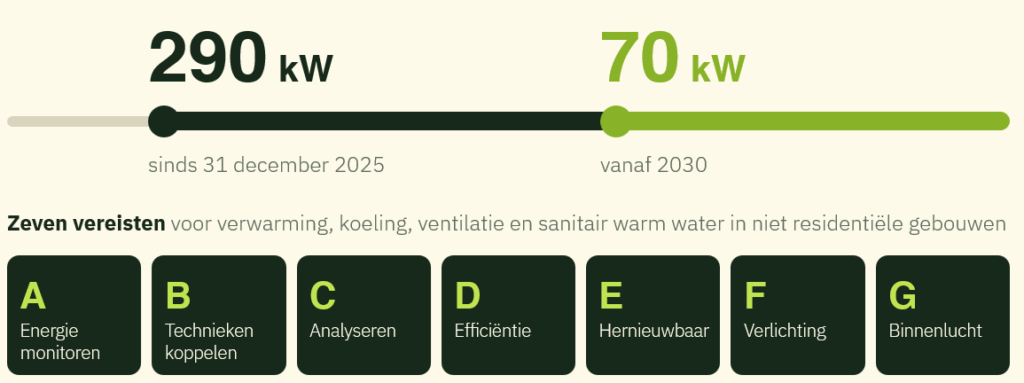
The energy expert verifies this using the BACS supporting document from the Flemish Energy and Climate Agency, a spreadsheet with a yes or no for each requirement. You can fill it out yourself to know exactly what is missing in your building.
What is not mandatory
The regulations do not require your installations to be new. Existing meters may remain if they are readable and meet the requirements of the EPC NR. Lighting only counts from 2028 and does not need to be linked to the system even then. The mandatory alarm procedure is primarily an organizational agreement regarding who receives which alarm and what happens next. You can already draft this today.
The problem lies in the control cabinet
In most buildings, the fans, valves, pumps, and sensors are still working fine. What is outdated is the controller that manages them. Replacing that is different from replacing the entire system.
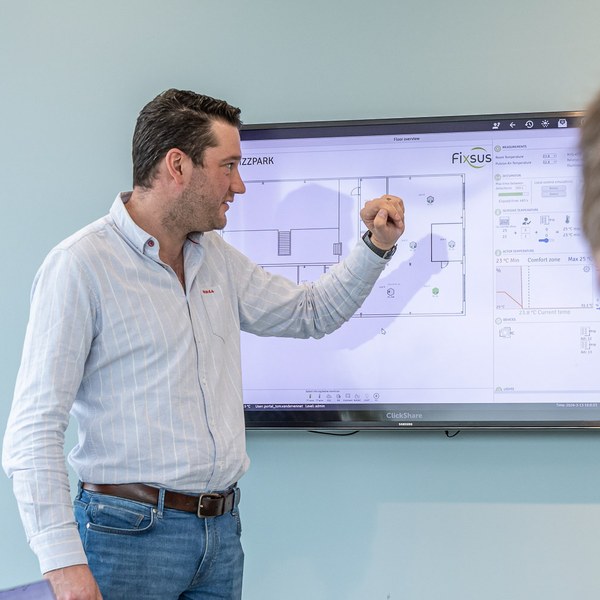
“The fans and valves usually still work perfectly; it is only the controller that is worn out. In that case, you don’t just discard the entire installation.”
Maxime Hellebuyck, COO of Fixsus
During a retrofit to TIBA3, the sensors, valves, and actuators are retained, along with their cabling. The control equipment in the cabinets is replaced on-site with Beckhoff components, managed by a single PLC for the entire building. Old thermostats and local controls are replaced by simple Modbus devices, which a technician can easily maintain or replace later. You receive new electrical diagrams and a digital as-built file. Where meters or sensors are missing for BACS, they are added. The works are carried out in phases while the building remains in use.
Because TIBA3 works with open protocols such as BACnet, Modbus, KNX, and M-Bus, your installation remains maintainable by any technician familiar with them even after the conversion. Beckhoff is standard industrial hardware, and you receive 25 years of support on the supplied materials. When something needs to change later, you decide when and with whom.
Know what can stay
During a technical walkthrough, we will examine your control cabinets, meters, and sensors together and review the supporting document for your building. Afterwards, you will know what can be retained, what is needed to be BACS-compliant, and how this can be achieved in phases.
Schedule a walkthrough via the contact form or call +32 (0)9 393 46 00.
Dit delen:

Fixsus team
Gebouwbeheersystemen, Fixsus
Gerelateerd nieuws
-

A building is not smart. The technology must be.
Koen Verschuere on open systems, retrofits without demolition work, and buildings that will still be understandable in twenty-five years.
-

Retrofitting in healthcare: control over your building without replacing everything
Healthcare technology that fails to communicate? A retrofit brings everything together without the need for full replacement.
-

The building that no one understands anymore
Smart building, you say? Facility managers are the first to react skeptically. They know the promises. And they know what remains of them in practice.